
Plan A Trip Around Mantas
How to plan a manta-ray dive trip around season, setting, experience and responsible encounters rather than a promised sighting.
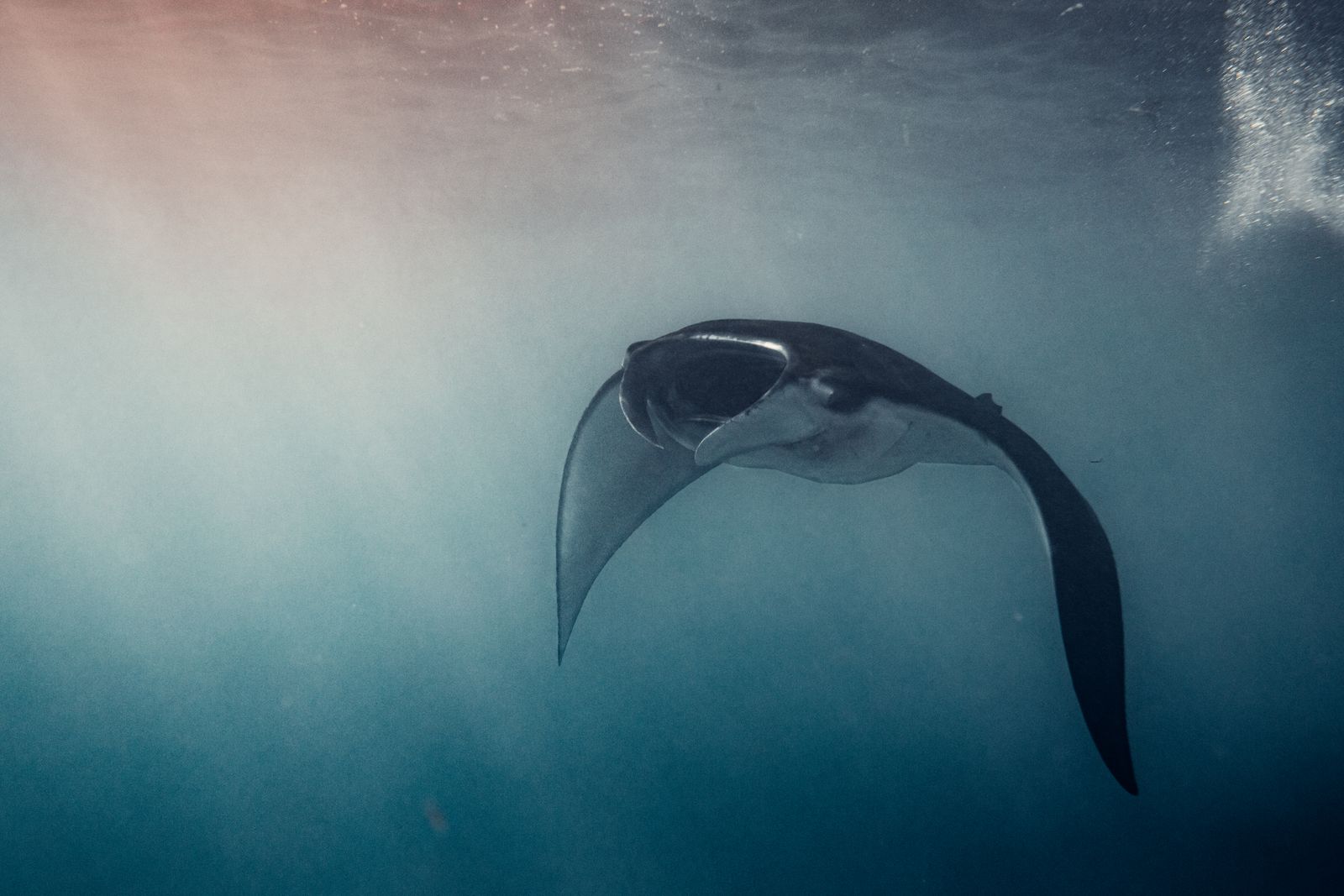
A manta trip is not a single kind of holiday. One may mean a protected reef, another a long crossing on a liveaboard and another a night dive under carefully managed lights. Choose the experience as well as the animal and the whole trip becomes more rewarding.
Choose a trip, not a guarantee
Mantas are compelling because they make a dive feel briefly larger than the plan. That does not make them bookable on command. Conditions, food, current and local movement decide the encounter. A good trip begins by choosing a healthy destination and a well-run operator, then allowing the animal to remain the surprise.
Ask what the normal dive day looks like, how much boat time is involved and whether the trip is built around reef, pelagic water or night diving. Those answers matter more than an enthusiastic caption.
Raja Ampat for reef-rich days
Raja Ampat suits divers who want mantas woven into a broader reef holiday. The draw is not only a possible ray overhead. It is colourful reefs, island scenery, fish life and the satisfaction that an ordinary dive can still be extraordinary.
It rewards patience and a flexible itinerary. Sea state and local conditions shape the route, so leave room for guides to choose the strongest sites rather than demanding a fixed sequence.
Socorro for open-ocean scale
Socorro feels different because the liveaboard journey and open Pacific setting are part of the story. This is a trip for divers comfortable with boat life, changing conditions and the idea that the blue itself is a serious part of the dive.
Check experience requirements honestly. Big-water destinations are not improved by pretending a diver is ready for a profile they find stressful. Calm competence is much more useful than bravado.
Kona after dark
Kona’s night manta dive is memorable because the scene is unusual: controlled lights attract plankton and divers watch from a settled position while rays pass through the water above. It can feel theatrical, but the best operators make the rules clear enough that the animals retain control of the encounter.
Choose an operator that explains positioning, light use and what happens if conditions change. A calm group makes the experience better for everyone, including the manta.
The Maldives for a varied holiday
The Maldives works when mantas are one desired thread in a warm-water week rather than the only plot. Atolls offer different rhythms, from protected reef dives to channels and cleaning-station possibilities.
Season and local knowledge matter. Ask what is realistic for the atoll and dates you are considering, then judge the trip by the full diving programme rather than a single species.
Pick the season with a local question
A destination name alone is not a season. Mantas may use different parts of the same region as currents and plankton shift, and a resort calendar can make a broad promise sound more precise than it is. Ask an operator which sites are normally productive in your travel window and how often the itinerary can reach them.
That question also reveals whether the trip has depth beyond one headline. A thoughtful answer mentions weather patterns, alternative dives and the kind of conditions that change the plan. An answer that treats every date as identical is usually a reason to keep looking.
Match the water to your experience
Mantas can appear in easy, shallow conditions, but famous encounters are not automatically beginner dives. A cleaning station may ask for excellent buoyancy and stillness; a channel may involve current; a liveaboard may mean repetitive entries, ladders and a schedule that starts before breakfast has formed an opinion.
Tell the operator about your recent diving, not only your certification card. If you need a refresh, guided buoyancy practice or a calmer first day, build it in. The reward is more attention for the animal and less mental bandwidth spent negotiating your equipment.
Bring the simple gear that helps
Use the kit that lets you stay quiet in the water: well-fitting fins, a mask you trust and enough exposure protection to prevent a long dive becoming a cold, distracted one. Cameras are welcome when they do not turn every diver into an underwater traffic cone.
Set the camera before the manta arrives, keep strobes and arms compact, and accept that a good memory does not require a close portrait. Often the strongest image is the one that leaves room for the setting and shows the ray moving on its own terms.
What a good operator does
A responsible operator gives clear briefings, limits crowding where possible and does not chase, touch or block an animal. They will be precise about current, entry and where divers should settle.
This is not cautious wording designed to make a holiday less exciting. It is what lets a manta continue behaving naturally long enough for the group to see something worth remembering.
Build margin into the itinerary
Give a manta-focused trip several dive opportunities rather than one decisive day. Weather, travel fatigue and surface conditions are real parts of the ocean, not mistakes in an itinerary.
A spare day also makes the whole holiday feel less like an exam. If the manta moment comes, it lands better when nobody has been watching the clock all week.
The detail that changes the memory
The best manta memory is rarely the closest pass. It is often the moment you stop finning, hear your own breathing and notice an animal moving through its ordinary world with no interest in performing for you.
Plan carefully, choose the setting that fits your experience and give the encounter space. That is how a manta trip becomes a real dive holiday rather than a very expensive attempt to control the sea.
Make this trip real
Places to explore
Melissa’s Garden
Indonesia
One of the more stunning dives sites in raja ampat. The color of the coral garden will blow your mind. Near piaynemo island you will enjoy the marvelous view point.
Roca Partida
Mexico
Roca Partida may seem like it is out in the middle of nowhere, sitting approximately 70 miles west of Socorro and 85 miles from San Benedicto, but it is thriving with life. Accessible only by liveaboard, this is an advanced dive on a pinnacle that rises from hundreds of feet of water.
Golden Arches
United States
Golden Arches is your typical Hawaiian reef dive off the Kona coast. Visibility gets better the deeper and further away from the surf zone you get. Check conditions as the current can get strong here at times.
Keep exploring
Related marine life
Manta Ray
571 known dive sites · 41 countries
Marine life
Reported around Aruba, Australia, Belize and 38 more.