
Where to See Manta Rays
Ten manta destinations worth travelling for — from Raja Ampat and Socorro to Kona at night — plus the small details that make each trip different.
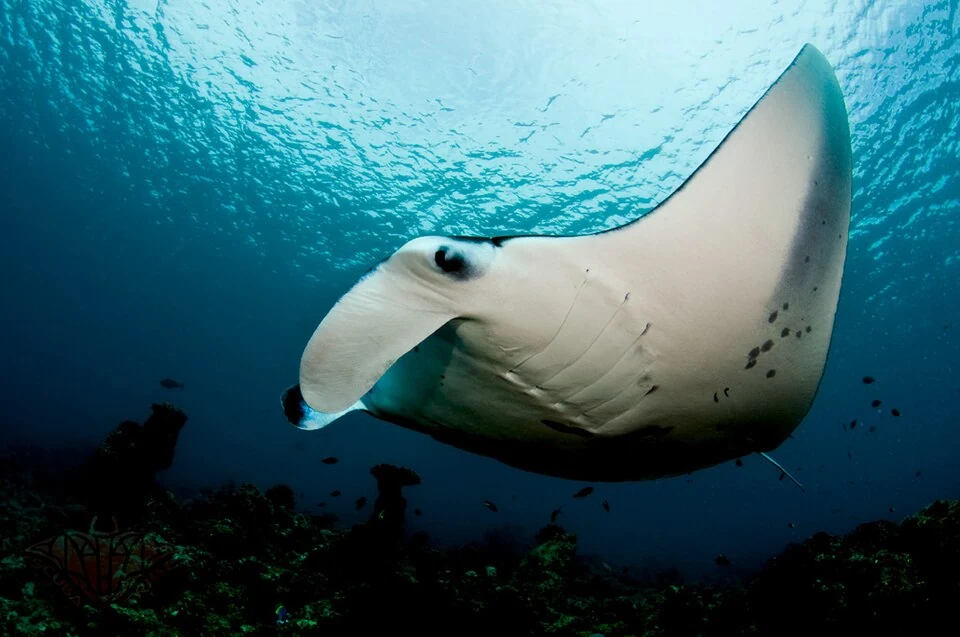
A manta ray can be wider than a car, eat plankton smaller than your fingernail, and make even experienced divers forget to check their computer for a second. But “where can I see one?” is the right question to ask next. Not every manta trip is the same: one is all colourful reef and jungle islands, another means crossing open ocean on a liveaboard, and one happens under lights after dark.
What makes a manta trip worth the flight?
The best manta destination is not simply the one with the highest chance of a sighting. It is the place where the whole dive day feels worthwhile: a cleaning station on a bright reef, a dramatic current-swept channel, pelagic blue water, or a night encounter that feels like science fiction. Mantas are wild animals, not an appointment on a timetable, so choose a trip you would still be thrilled to take if the blue stayed empty for one dive.
The ten places below offer very different versions of that dream. Some are easy to fold into a normal holiday. Others are proper expeditions. All earn their place because a manta encounter there comes with a distinctly memorable world around it.
1. Raja Ampat, Indonesia
If you want mantas to be one chapter of an extraordinary dive trip rather than the entire plot, Raja Ampat is hard to beat. Cleaning stations such as Manta Sandy and Blue Magic sit inside a region famous for its reefs, fish life and limestone islands. You can spend the morning watching a manta circle above a reef and still have a whole day of colour, movement and small surprises ahead of you.
This is the choice for a diver who wants the full “I cannot believe this is real” expedition: reefs that reward looking closely, landscapes worth waking up for, and mantas that feel like the calmest possible interruption.
2. Socorro, Mexico
Socorro, also called the Revillagigedo Archipelago, is for divers who want big-ocean energy. Getting there usually means a liveaboard, open water and a more demanding adventure — but the reward is the chance to meet enormous oceanic mantas in a setting already known for sharks, dolphins and pelagic action.
At sites such as The Boiler and Cabo Pearce, the manta is not a decorative extra. It can be the creature that makes a serious expedition feel personal: a giant animal appearing from the blue and choosing, for reasons entirely its own, to glide close by.
3. Komodo, Indonesia
Komodo is the glorious middle ground: mantas, punchy currents, colourful reefs, sharks, unusual islands and a proper sense of movement. Manta Point at Karang Makassar and Manta Alley are the names most divers arrive knowing, but the beauty of Komodo is that the trip never depends on one animal behaving on cue.
Choose Komodo when you want a journey with a little edge. The water can move, the dives can feel alive, and the landscape above the surface is as much part of the memory as the moment a manta tilts its wings and passes overhead.
4. The Maldives
The Maldives is for anyone who wants a manta trip wrapped in warm water, boat life and that absurdly clear-blue view from the surface. Baa Atoll is famous for seasonal gatherings of mantas, while cleaning stations around other atolls offer scuba divers a more patient chance to watch their behaviour.
One useful detail matters here: Hanifaru Bay is renowned primarily for snorkelling, not scuba diving. That does not make it less spectacular; it simply means a well-planned manta trip should match the experience you want rather than assume every famous name is the same kind of encounter.
5. Nusa Penida, Bali
Nusa Penida is one of the most accessible ways to add manta ambition to a normal tropical holiday. A short trip from Bali can put you in the water at Manta Point, where the chance of seeing these rays is paired with the welcome simplicity of an established day-diving destination.
It is not the most remote or wild option on this list, and that is precisely its charm. Choose Nusa Penida if you want to turn a Bali trip into a manta story without committing to an expedition-level itinerary.
6. Kona, Hawaii
Kona does not try to copy a daytime cleaning station. Its famous manta encounters happen at night: lights attract plankton, plankton attracts mantas, and the rays loop through the illuminated water with an almost unfair sense of timing. The effect is less “reef safari” and more “front-row seat at an underwater ballet”.
For divers who care about a single unforgettable experience, Kona deserves its own category. You are not chasing a distant silhouette across blue water. You are settled in, breathing quietly, while giant rays glide through the beam above you.
7. Yap, Micronesia
Yap is a classic manta destination with a more intimate feel than the busiest tropical hotspots. Its cleaning stations give divers a chance to watch rays returning to a place with a purpose, rather than merely passing through on the way somewhere else.
Pick Yap if you love the behavioural side of wildlife encounters: the pauses, the repeated circles, the tiny cleaner fish at work and the satisfying feeling that you are observing a routine the manta had long before you arrived.
8. Palau, Micronesia
Palau is the answer for divers who refuse to plan a one-note trip. The country is already known for walls, channels, sharks and fish-filled water; mantas are an excellent reason to look up, but never the only reason to jump in.
That makes Palau a generous choice for a mixed group. The manta-focused diver can chase the possibility of a big encounter, while everyone else still gets the kind of varied, high-energy diving that makes an itinerary feel complete.
9. Tofo, Mozambique
Tofo is for the diver who prefers a little dust on the map. This stretch of Mozambique is known for larger pelagic life, including mantas and whale sharks, and the feeling is more wild coastline than polished resort routine.
Come here for adventure rather than perfect predictability. When the ocean gives you a manta in Tofo, it arrives as part of a bigger, wilder story — one written in open water, current and whatever happens to be moving through that day.
10. Isla de la Plata, Ecuador
Isla de la Plata is the less obvious entry on this list, which is exactly why it belongs here. Seasonal encounters with large oceanic mantas make it a compelling choice for divers who would rather find an expedition feeling than a familiar photo stop.
It is not the easy default. It is the option for someone who likes a trip with a little mystery built in: a less-polished route, a powerful animal, and the quiet satisfaction of having gone somewhere because it genuinely intrigued you.
If you only choose three
Choose Raja Ampat for the most beautiful all-round dive journey: mantas, biodiversity and a landscape that keeps working on you between dives. Choose Socorro if close encounters with giant oceanic mantas and other big animals are the real reason for the trip. Choose Komodo for the strongest balance of mantas, vivid reefs, lively diving and practical travel logistics.
There is no universal winner, because these places are not trying to give you the same trip. The better question is whether you want a gentle holiday with a chance of magic, a classic tropical dive week, or an adventure you will still be talking about when the logbook is full.
The small facts that make the encounter better
Mantas are the largest rays in the world, but they feed on tiny plankton. Their flexible cephalic fins help funnel food into an open mouth, and the spot pattern on each underside is unique enough for researchers to recognise individuals. A good underside photograph, with the date and location, can genuinely help manta research rather than merely collect likes.
At cleaning stations, small fish remove material from a manta's skin while the ray circles patiently above the reef. During feeding, mantas can roll or turn through dense plankton; sometimes several line up behind each other, a sight that looks remarkably like an underwater flight formation. And the manta you see in shallow blue water may belong to an animal capable of deep dives far beyond recreational limits.
How to let the manta choose the moment
Stay low, stay to the side, control your buoyancy and give the ray an open route. Do not touch it, chase it, swim directly above a cleaning station or turn a good encounter into a group pursuit for a photograph. If a manta comes close, the useful response is wonderfully boring: breathe, hold position and let it pass.
That restraint protects the reef and lets the manta keep feeding, cleaning or socialising. More selfishly, it also gives you the best chance of the moment every diver wants: a giant ray gliding so calmly overhead that the rest of the world goes quiet for a few seconds.
Make this trip real
Places to explore
Melissa’s Garden
Indonesia
One of the more stunning dives sites in raja ampat. The color of the coral garden will blow your mind. Near piaynemo island you will enjoy the marvelous view point.
Roca Partida
Mexico
Roca Partida may seem like it is out in the middle of nowhere, sitting approximately 70 miles west of Socorro and 85 miles from San Benedicto, but it is thriving with life. Accessible only by liveaboard, this is an advanced dive on a pinnacle that rises from hundreds of feet of water.
Golden Arches
United States
Golden Arches is your typical Hawaiian reef dive off the Kona coast. Visibility gets better the deeper and further away from the surf zone you get. Check conditions as the current can get strong here at times.
Keep exploring
Related marine life
Manta Ray
571 known dive sites · 41 countries
Marine life
Reported around Aruba, Australia, Belize and 38 more.