
Dive type Reef
Dive site profile
Long Beach
Cape Town, Western Cape, South AfricaAbout this dive site
Explore the water around Western Cape
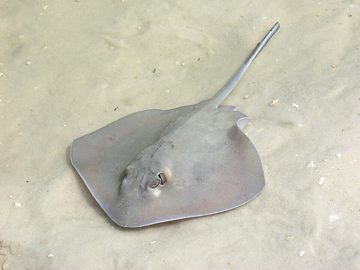
Name: The name "Long Beach" is derived from the stretch of sandy beach at the site. Great training site. Depth: The bottom shelves gradually down from the shore to a depth of 18 m at the Simon's Town Harbour mouth, 5 m is reasonably close inshore, and about 9 m at the maximum distance that the average diver is likely to swim. Marine life: There can be quite a lot to see on the barge wreck, which provides a base for seaweeds and shelter for fish. Little clumps of sessile growth are based on the pipeline, red bait, other wreckage and debris, and loose rocks, mostly less than 0.5 m diameter. There are extensive areas of sand with weed in the deeper water, some of it attached to the bottom, but a lot apparently loose. In some places, there are beds of strap Caulerpa, and where red-bait has rooted itself in the sand, little clumps of other organisms gather, including large numbers of Common feather stars. Large numbers of Warty pleurobranch and Sand slug wander around, and at times there are quite a lot of sea hares. A wide variety of fish have been seen at this site, including several not normally found in the Western Cape, which is carried down the east coast by the currents, and the eddies bring them into False Bay, and for some unknown reason, they often end up at Long Beach. Seals are fairly common, and Southern Right whales also occasionally come into the bay and have been seen during dives at Long Beach. Stingrays are occasionally seen, some of them quite large, and the very shy and elusive White Steenbras is caught nearby, but never seen by divers on open circuit Scuba. Photography: Wide-angle or macro lenses are most likely to produce good results. Natural light is usually sufficient as it is shallow, but a flash will bring back the true colours. External flash is essential for anything further than about 300 mm as there is usually significant suspended matter which will cause backscatter with internal flash. Topography: Flat sand bottom with occasional lumps of growth on loose rocks, wreckage and other artefacts. There is a pipeline perpendicular to the shoreline near the wall at the south end of the beach, which is visible in the aerial photo, and a wreck of a small steel barge just north of this pipeline. In 2009 a sports fisherman sank at moorings in the bay during a storm and drifted alongside the barge wreck, where it broke up and came to rest between the south end of the barge and the offshore end of the inshore section of pipeline. Only the bottom structure with engines, gearboxes and shafts and various smaller pieces of loose wreckage remains. Further out along the pipeline are pieces of wreckage of a small sailing yacht, including the ballast keel and the lower portion of the hull.
Site details
Plan the dive
Dive Conditions
Dive Types
- Reef
What you may encounter
Marine Life
Dive site gallery
Photos from Long Beach
Diver feedback
No reviews yet
Be the first diver to share a useful, honest account of this place.